Rehabilitation, for the life you quietly scaled back
The stairs you avoid, the walks you gave up, the guarded limb after an operation that officially went fine. Most people adapt around these for years. Supervised, progressive rehabilitation is the single best-evidenced way to take them back, and working out where to start costs you a free call.
- My knee aches on stairs, so I quietly gave up the walks I loved.
- My back has dictated what I lift, how I sit and how far I travel for years.
- The operation went fine. I am the one left with the stiff, guarded limb.
- Since the diagnosis, I am afraid of exertion itself, and my world keeps shrinking.
Where exercise-led rehabilitation has the strongest evidence
- Knee osteoarthritis: pain relief from supervised exercise comparable to anti-inflammatory medication
- Chronic low back pain: clinically meaningful improvement across hundreds of trials
- Post-surgical recovery, and return to sport or daily function
- Heart and lung conditions: structured rehabilitation with some of the strongest evidence in medicine
One team across sport, orthopaedics and neurology
Assessment before any technique is chosen
Manual, exercise and specialist techniques, including pelvic floor physiotherapy
The best-evidenced department in the clinic
Nothing else at AION has an evidence base this deep, and it deserves to be said with numbers:
- Knee osteoarthritis: high-quality evidence across 44 trials that exercise therapy reduces pain and improves function, comparable to anti-inflammatory drugs and lasting months after the program ends (Cochrane 2015)
- Chronic low back pain: across 249 trials and over 24,000 participants, exercise beats usual care by a clinically important margin (Cochrane 2021)
- Pulmonary rehabilitation: so consistently effective for breathlessness and walking distance that Cochrane declared further trials against usual care unwarranted (Cochrane 2015)
- Cardiac rehabilitation: 28% lower heart attack risk and 42% fewer hospitalizations across 85 trials (Cochrane 2021)
- The honest part: the evidence belongs to active, supervised, progressive exercise. Passive treatments alone carry far less, which is why movement is the spine of every plan here
Who may be suitable
This department is built for a specific injury or movement problem, identified through assessment, not a general fitness program.
It may be considered when
- You have an injury, post-operative recovery, or movement issue to address
- A movement or functional assessment supports a rehabilitation plan
- You want return-to-sport or daily function as the actual goal
It is not offered
- As a substitute for medical or surgical treatment where that is what is needed
- Without an initial assessment to guide the plan
- As a one-size-fits-all program regardless of your injury
What working with this department involves
The plan is built around your specific case and adjusted as you progress.
Before
A movement, strength and function assessment establishes your baseline and identifies what needs to change.
During
Your physiotherapist selects from manual therapy, exercise therapy, and specialist techniques such as laser, TECAR, dry needling or shockwave, based on your specific findings.
After
Progress is measured against your original assessment, and the plan is adjusted rather than repeated by default.
Rebuilding confidence under reduced load
Where your assessment supports it, the AlterG treadmill gives your physiotherapist a controlled way to practise walking or running while reducing how much load you carry. The goal is not the machine itself; it is restoring a movement pattern you can progressively take back into daily life or sport.
Movement with immediate feedback
MediTouch adds visual feedback to task-based rehabilitation, helping you and your physiotherapist see how a movement is changing while you perform it. It is used as one part of the plan when feedback makes practice clearer and more engaging.
A supporting technique, not a standalone plan
OptonPro laser therapy may be used by the rehabilitation team where your assessment indicates it belongs. It sits alongside movement work and clinical review rather than replacing them, and its role is reassessed as your function changes.
Related clinical evidence
View the full clinical evidence library →The evidence behind Rehabilitation & Physiotherapy
Shockwave Therapy for Plantar Fasciitis: The Established Evidence
Shockwave Therapy for Other Tendinopathies: Where It Works and Where It Doesn't
Instrumented 3D Gait Analysis: What the Evidence Actually Supports
Body-Weight-Supported Treadmill Training After Stroke: A Well-Studied Modality With a Null Headline Result
AlterG Anti-Gravity Treadmill in Post-Surgical Orthopedic Rehab: Promising but Early
Questions about Rehabilitation & Physiotherapy
You need an assessment first, whether that comes from your own physician, a diagnostic finding, or a direct physiotherapy consultation. The plan is built from that assessment.
Manual therapy, exercise therapy, and specialist techniques such as laser therapy, TECAR therapy, dry needling and shockwave, chosen based on your specific injury and assessment.
No. The department covers sports rehabilitation, orthopaedic and post-operative recovery, neurological rehabilitation and pelvic floor physiotherapy, for anyone with a relevant assessment.
AION is a private clinic, and this department is private-pay rather than delivered through GESY. Your physician or physiotherapist can discuss how it fits alongside any care you already receive through the national health system.
Connected care
One body. Everything connects.
What you've just read is rarely the whole story. These are often part of the same picture.
Treatment
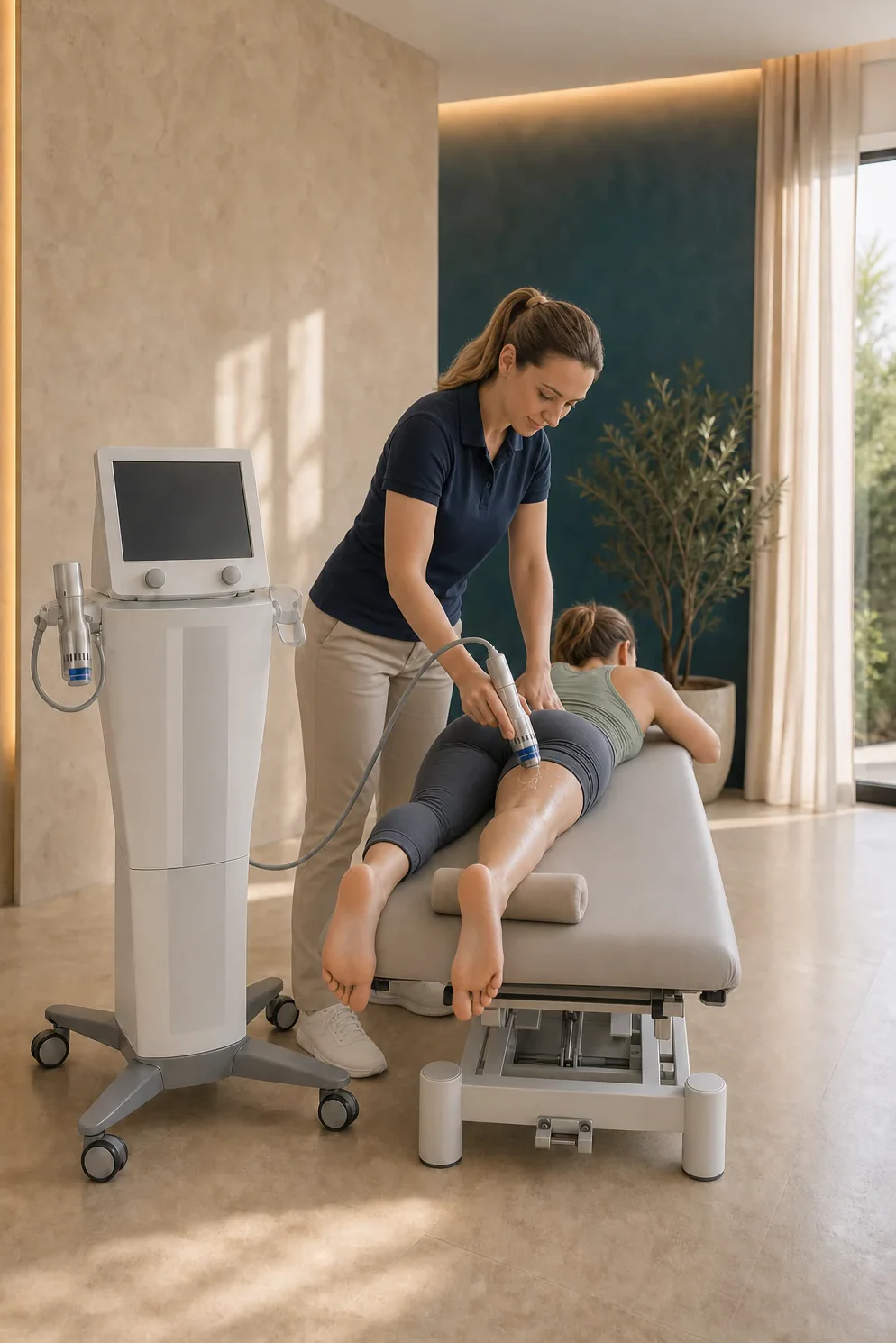
Shockwave Therapy
Focused sound-wave pulses for stubborn tendon pain: heel, calcific shoulder, outer hip and tennis elbow, within a physiotherapy plan.
Treatment
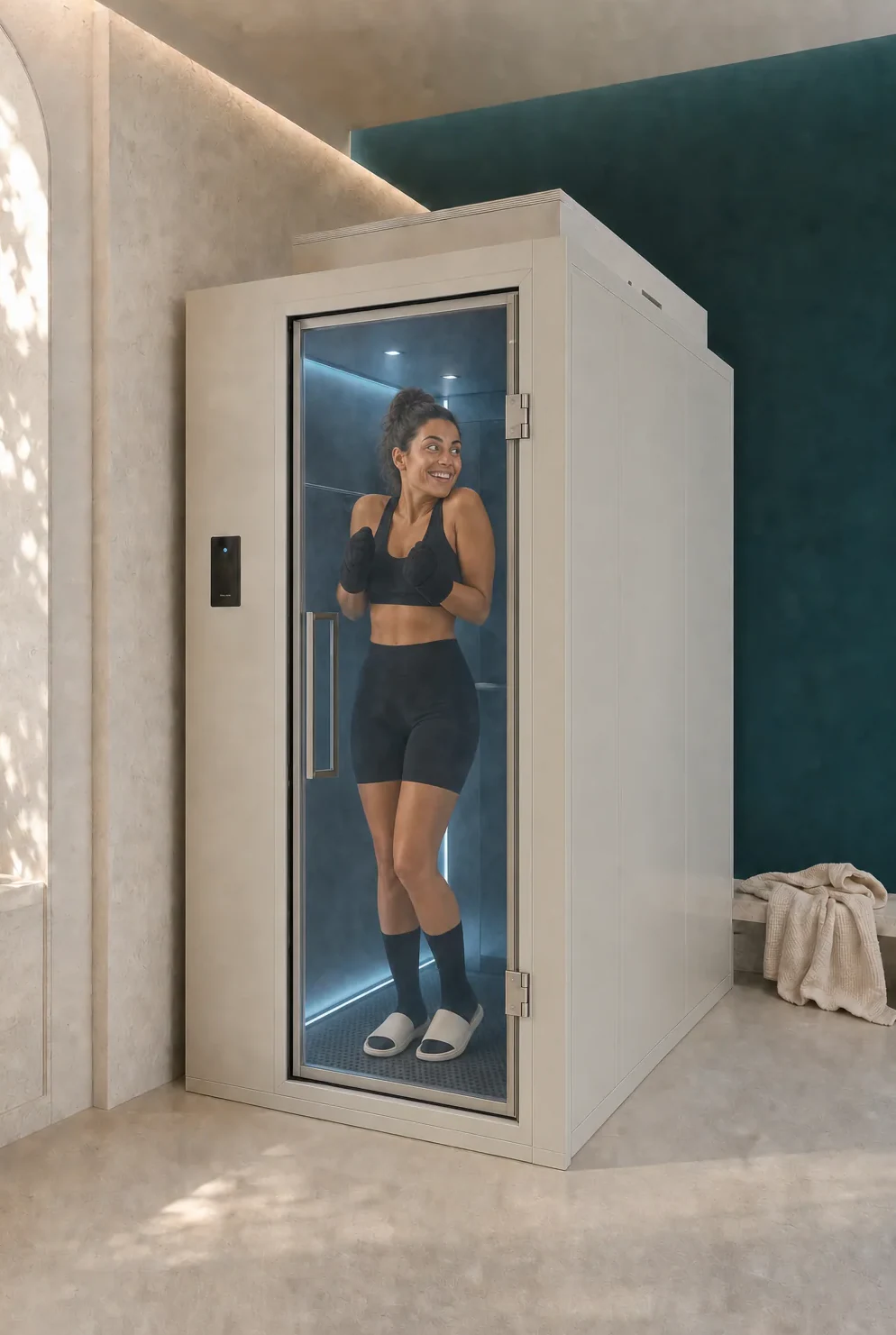
Cryotherapy
Three minutes at minus 85 degrees in an electric walk-in chamber, with screening first.
Program
Performance AION 360
Sports performance testing in Limassol, for people whose real question is not what is wrong, but what would make them perform better.
Find out if Rehabilitation & Physiotherapy is your answer.
One free call. You leave knowing whether AION fits your case, what it would involve, and what it costs. If the honest answer is no, you hear that too, and it costs you nothing to hear it.
Your free call is with Dr Inbar Almon Tofan, AION Department Manager, and Sylvia, Patient Coordinator. It is a first conversation, not a medical consultation.