
Diagnostics & Testing
ApoB Test: What It Measures and How It Differs From LDL-C
LDL cholesterol counts fat. ApoB counts particles, and particles are what actually cause arterial damage. Here's what the ApoB test measures, why some physicians consider it more accurate than LDL, and when it changes the picture.
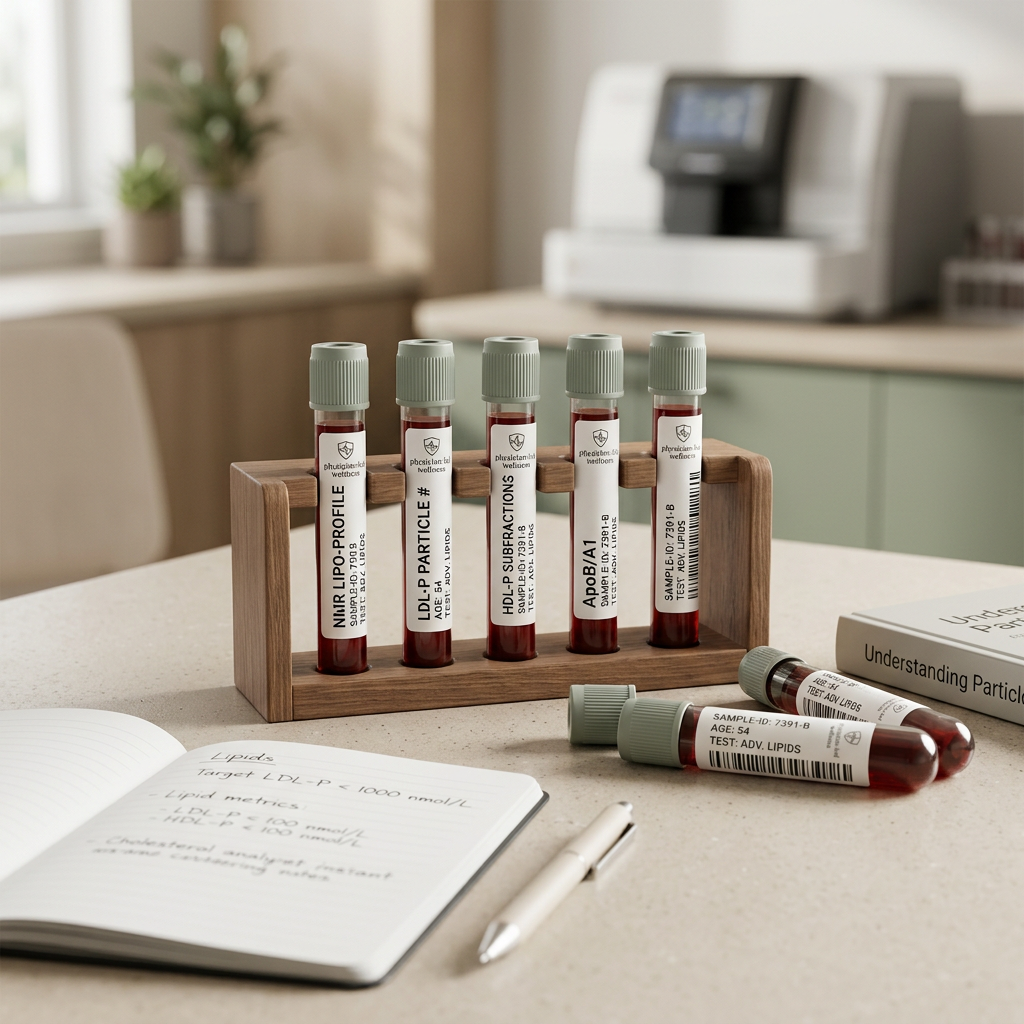
TL;DR: ApoB (apolipoprotein B) measures the actual number of artery-damaging particles in your blood, while LDL cholesterol measures the amount of cholesterol those particles carry. Most of the time the two numbers agree, but in a meaningful minority of people, especially those with diabetes, obesity, or metabolic syndrome, they disagree. When they disagree, ApoB is the better predictor of cardiovascular risk. Some physicians now consider it a more accurate single number than LDL alone.
What Does ApoB Actually Measure?
Every LDL particle, along with VLDL and other related particles, carries exactly one molecule of apolipoprotein B on its surface. Measuring ApoB is essentially counting the total number of these artery-damaging particles in your blood, rather than measuring how much cholesterol they're carrying. This distinction matters because it's the particle itself, not the cholesterol cargo inside it, that gets lodged in artery walls and starts the plaque-building process.
Why Would LDL and ApoB Ever Disagree?
LDL cholesterol assumes each particle carries a roughly average, predictable amount of cholesterol. But particle size varies significantly between people. Some people have many small, cholesterol-poor LDL particles. Others have fewer large, cholesterol-rich ones. Two people can have the exact same LDL cholesterol number while having a very different total particle count, and it's the particle count, not the cholesterol content, that drives arterial damage.
This mismatch is called discordance, and it happens more often in people with insulin resistance, type 2 diabetes, obesity, and metabolic syndrome, conditions that tend to produce more small, dense LDL particles. In these cases, LDL cholesterol can look deceptively normal while ApoB, and the real particle count, is elevated.
LDL-C vs. ApoB: What Each Number Actually Tells You
| Marker | What It Measures | Best At | Can Miss |
|---|---|---|---|
| LDL cholesterol (LDL-C) | Amount of cholesterol carried by LDL particles | Simple screening in most people | Risk from many small, cholesterol-poor particles |
| ApoB | Total count of LDL, VLDL, and related atherogenic particles | Risk in diabetes, obesity, metabolic syndrome | Nothing major; considered the more complete number |
Who Benefits Most From Getting ApoB Tested?
ApoB testing adds the most value for:
- People with type 2 diabetes or insulin resistance, where LDL-C often underestimates true risk
- People with obesity or metabolic syndrome
- People with high triglycerides, since high triglycerides often signal more small, dense LDL particles
- Anyone with a family history of early heart disease despite a "normal" LDL number
- People already on statin therapy, to confirm the treatment is actually lowering particle count, not just cholesterol content
For people without these risk factors, LDL-C alone is often still a reasonably good estimate, which is part of why ApoB isn't yet universal in routine screening.
Is ApoB Replacing LDL Testing?
Not exactly, but its role is growing. Several major cardiology guidelines now recommend ApoB as an optional or preferred additional measurement, particularly for people with diabetes, high triglycerides, or obesity, where LDL-C is more likely to be misleading. Some lipid specialists argue ApoB should be the primary target number for anyone on cholesterol-lowering therapy, since it reflects the thing actually driving arterial damage more directly than LDL-C does.
What Does a High ApoB Result Mean for Treatment?
A high ApoB means more atherogenic particles are circulating than the LDL number alone might suggest, which generally shifts risk management toward being more aggressive: this can mean adjusting statin dose, considering additional medications, or focusing harder on the lifestyle factors that reduce particle production, like reducing refined carbohydrate intake and addressing insulin resistance directly. As with any single lab marker, ApoB is most useful interpreted alongside your full risk profile, not as a number to fixate on in isolation.
Related AION Resources
AION's cardiovascular and biological age diagnostics pathway looks at ApoB alongside Lp(a) and other markers for a complete risk picture, not a single number in isolation. Our companion guide on Lipoprotein(a) testing covers a related, genetically-driven risk marker. For the underlying evidence on advanced cardiovascular risk assessment, see our review of coronary artery calcium scoring.
FAQ
What is the difference between ApoB and LDL cholesterol? LDL cholesterol measures the amount of cholesterol carried by LDL particles. ApoB measures the actual number of those particles, which is considered a more direct measure of cardiovascular risk.
Can my LDL be normal but my ApoB be high? Yes. This is called discordance and happens more often in people with diabetes, obesity, or metabolic syndrome, where many small, cholesterol-poor particles can produce a normal-looking LDL number alongside a high particle count.
Who should get an ApoB test? People with diabetes, insulin resistance, obesity, high triglycerides, or a family history of early heart disease despite normal LDL benefit most from ApoB testing.
Is ApoB testing widely available? Yes, it's a standard blood test available through most labs, though it isn't yet included in every routine cholesterol panel by default.
Does a high ApoB always mean I need medication? Not automatically. Like LDL, ApoB is interpreted alongside your full cardiovascular risk profile, including age, blood pressure, and family history, before treatment decisions are made.
Should I ask my doctor to add ApoB to my next blood test? It's a reasonable request, especially if you have diabetes, obesity, high triglycerides, or a family history of heart disease despite normal LDL results in the past.
This article is educational and is not medical advice. Whether any therapy is appropriate for you is a clinical decision made by a physician after an individual assessment.