Recovery & Regenerative Therapies
Guillain-Barré Syndrome Treatment: Why Timing on Plasma Exchange Matters
Guillain-Barré syndrome is a medical emergency where speed of treatment affects outcome. Here's why plasma exchange is a first-line option, how it compares to IVIG, and why acting fast matters more than which treatment you choose.
TL;DR: Guillain-Barré syndrome (GBS) is a medical emergency, not a condition to monitor at home. Plasma exchange (TPE) is an ASFA Category I, Grade 1A treatment, meaning it has the strongest level of evidence, alongside IVIG, and both are considered first-line. What matters most is not which treatment is chosen, but how quickly treatment starts once weakness is progressing, since delayed treatment is linked to worse recovery.
What Is Guillain-Barré Syndrome, and Why Is It a Medical Emergency?
Guillain-Barré syndrome is an acute autoimmune condition where the immune system attacks the peripheral nerves, usually days to weeks after an infection. The hallmark pattern is rapidly progressive weakness, often starting in the legs and moving upward, sometimes over hours to a few days. In more severe cases, the weakness can reach the muscles involved in breathing and swallowing, which is why GBS is treated as a medical emergency requiring hospital-based monitoring, not a condition to wait out at home.
This rapid, unpredictable progression is the single most important thing to understand about GBS. A patient who can still walk on Monday can be unable to stand by Wednesday. That trajectory is exactly why the medical system prioritizes fast recognition and fast treatment over almost anything else in managing this condition.
What Are the Actual First-Line Treatments for GBS?
Two treatments carry the strongest evidence for GBS, and both are ASFA Category I:
- Plasma exchange (TPE), Grade 1A, the highest evidence grade, works by removing the circulating antibodies and inflammatory plasma factors driving the attack on peripheral nerves
- Intravenous immunoglobulin (IVIG), which modulates the immune response through infused donor antibodies
Multiple clinical trials have found these two treatments produce broadly comparable outcomes for most patients. Neither is definitively "better" across the board; the choice often comes down to logistics: vascular access and apheresis availability for TPE, versus infusion access and supply for IVIG. Combining both treatments sequentially has not shown clear additional benefit over either alone in most studied cases.
GBS Treatment Options Compared
| Treatment | ASFA Evidence Grade | Mechanism | Practical Consideration |
|---|---|---|---|
| Plasma exchange (TPE) | Category I, Grade 1A | Physically removes circulating antibodies and inflammatory proteins | Requires vascular access and a trained apheresis team |
| IVIG | Category I equivalent evidence | Modulates immune response via donor antibodies | Requires infusion access; widely available in most hospital settings |
| Supportive/ICU care | Standard of care alongside either treatment | Monitors breathing, swallowing, and autonomic function | Essential regardless of which immunotherapy is chosen |
Why Does Timing Matter More Than Which Treatment Is Chosen?
This is the single most important clinical point about GBS treatment. Research consistently shows that starting plasma exchange or IVIG earlier in the disease course, ideally within the first one to two weeks of symptom onset, is associated with better recovery outcomes than delayed treatment. The nerve damage in GBS is progressive while the immune attack is active; the sooner that attack is interrupted, the less cumulative nerve injury accumulates before the body's own recovery processes can take over.
This means the practical priority for anyone with rapidly progressive weakness is not researching which treatment is superior, it's getting to a hospital or specialist center capable of starting either treatment as quickly as possible.
What Symptoms Mean You Need Emergency Care, Not a Routine Appointment?
GBS symptoms that require same-day emergency evaluation, not a scheduled consultation:
- Weakness that is getting worse over hours to days, especially starting in the legs and spreading upward
- Difficulty breathing, a weak cough, or shortness of breath
- Difficulty swallowing or handling saliva
- Facial weakness or double vision developing alongside limb weakness
- Loss of the ability to walk unassisted when this is new
None of these should be monitored at home with a wait-and-see approach. Rapidly progressive weakness of this kind needs same-day hospital assessment.
What Does a Course of Plasma Exchange for GBS Actually Involve?
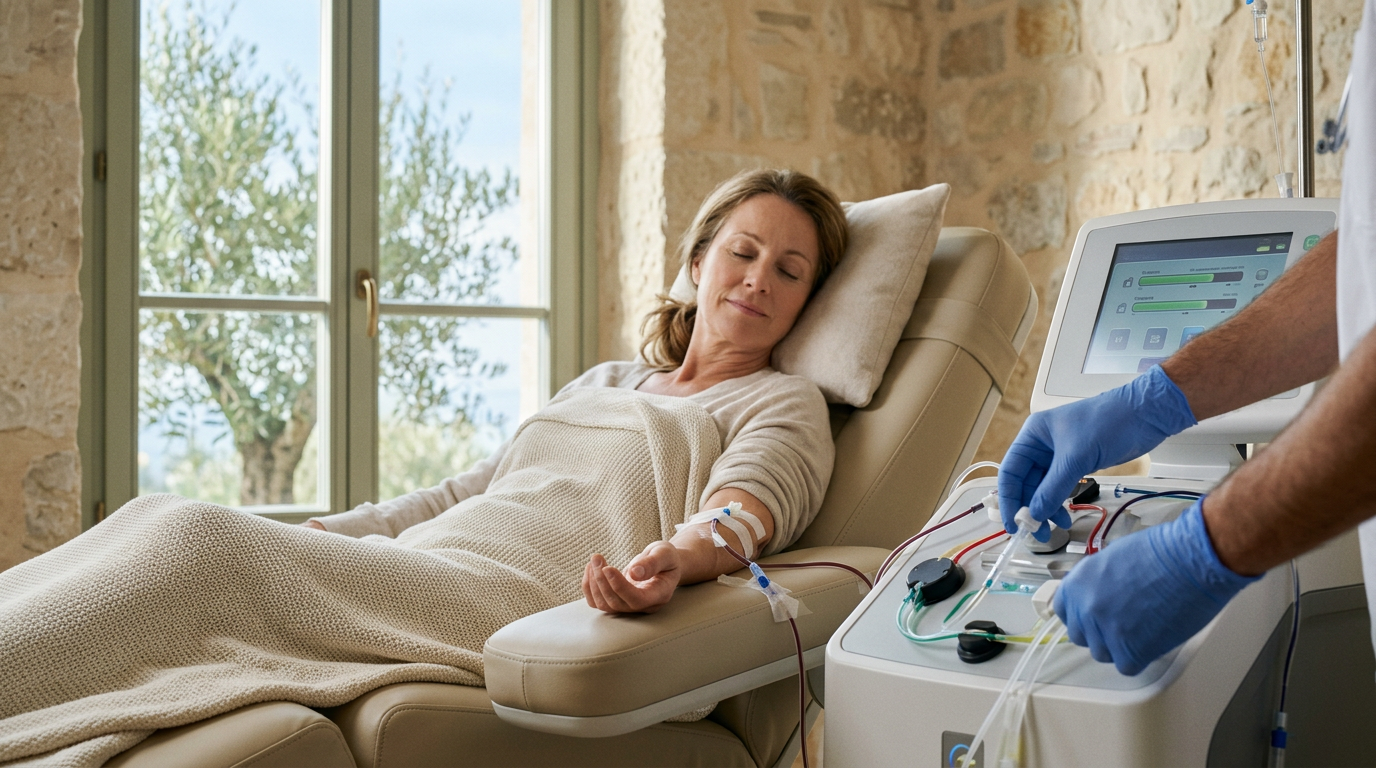
A typical TPE course for GBS involves a defined series of sessions over one to two weeks, with the total number based on the patient's clinical severity and response, decided by the treating specialist team. This requires vascular access and takes place under monitoring for blood pressure changes, allergic reactions to replacement fluid, and electrolyte shifts. Recovery from GBS itself, separate from the acute treatment phase, often takes weeks to months and can include a period of intensive rehabilitation for weakness that developed during the acute attack.
What Can Plasma Exchange Realistically Achieve, and What Can't It Do?
TPE does not reverse nerve damage that has already occurred; it interrupts the ongoing immune attack so further damage doesn't accumulate and the body's natural nerve repair processes can proceed. Most patients with GBS see meaningful recovery over weeks to months, though the pace and completeness of recovery varies by how severe the initial attack was and how quickly treatment started. TPE is not a guarantee of full recovery for every patient, but earlier treatment is consistently associated with better outcomes across the evidence base.
How AION Approaches GBS and Plasma Exchange
AION's plasma exchange program treats GBS as one of the clearest, strongest-evidenced indications for TPE, ASFA Category I, Grade 1A, while being direct that GBS is a hospital-level medical emergency requiring immediate assessment, not a scheduled elective procedure. Anyone with rapidly progressive weakness should seek emergency evaluation first; a specialist consultation supports the broader recovery and monitoring conversation once the acute emergency is being managed appropriately.
Related AION Resources
For a related autoimmune neurological condition with a similarly strong plasma exchange evidence base, see our guide on CIDP treatment options and where plasma exchange fits in. For the broader evidence picture across all plasma exchange indications, see therapeutic plasma exchange: what it's proven to treat and where it's experimental.
FAQ
Is Guillain-Barré syndrome a medical emergency? Yes. GBS can progress from mild weakness to breathing difficulty within days, which is why it requires hospital-based monitoring and immediate assessment rather than a wait-and-see approach.
Is plasma exchange better than IVIG for GBS? Neither is definitively superior. Both are ASFA Category I treatments with comparable outcomes in most studied patients; the choice often depends on access and logistics rather than one being clinically superior.
How fast does plasma exchange need to start for GBS? Earlier treatment, ideally within the first one to two weeks of symptom onset, is associated with better recovery outcomes than delayed treatment, since it limits how much nerve damage accumulates while the immune attack is active.
Can plasma exchange reverse nerve damage from GBS? No. It interrupts the ongoing immune attack so further damage doesn't accumulate, allowing the body's natural nerve repair processes to proceed, but it doesn't reverse damage already done.
How long does recovery from GBS take? Recovery varies significantly by severity and how quickly treatment started, but it typically takes weeks to months, sometimes including a period of rehabilitation for residual weakness.
What symptoms mean I should go to the emergency room instead of waiting for an appointment? Rapidly worsening weakness, breathing difficulty, trouble swallowing, or new facial weakness alongside limb weakness all warrant same-day emergency evaluation.
This article is for educational purposes and does not replace individualized medical advice. Suspected Guillain-Barré syndrome requires immediate medical evaluation.
Keep reading


This article is educational and is not medical advice. Whether any therapy is appropriate for you is a clinical decision made by a physician after an individual assessment.