
Diagnostics & Testing
Can Perimenopause Be Tested? What a Hormone Panel Can and Can't Confirm
There's no single blood test that definitively confirms perimenopause. Here's why hormone fluctuation makes testing tricky, which markers are still worth checking, and how physicians actually diagnose this transition.

TL;DR: No single blood test definitively confirms perimenopause. Hormone levels, particularly FSH and estradiol, fluctuate so much during this transition that one reading can be misleading in either direction. Diagnosis relies primarily on your age, symptom pattern, and menstrual cycle changes, with blood tests used to rule out other conditions (like thyroid disease) and to add supporting context, not to deliver a yes-or-no answer on their own.
Why Isn't There a Simple Perimenopause Test?
The core problem is biological, not a gap in testing technology. During perimenopause, the ovaries don't decline in a smooth, predictable line. Hormone production becomes erratic: estrogen can spike higher than a woman's baseline before crashing low, sometimes within the same month. A blood draw only captures a single moment in that fluctuation. A normal-looking FSH or estradiol result on a Tuesday doesn't rule out perimenopause; the same woman could show a clearly abnormal result the following week.
This is fundamentally different from a condition like diabetes, where a fasting glucose or HbA1c reading reflects a relatively stable, measurable state. Perimenopause hormone levels are a moving target by definition, which is exactly why clinical guidelines lean on symptom pattern and cycle history as the primary diagnostic tools, not a single lab value.
What Do FSH and Estradiol Actually Tell You?
Follicle-stimulating hormone (FSH) rises as ovarian function declines, since the pituitary gland produces more of it trying to stimulate follicles that are responding less. In theory, a persistently elevated FSH suggests declining ovarian reserve. In practice, FSH levels swing widely during perimenopause itself, an elevated reading one cycle can be followed by a normal reading the next, particularly in early perimenopause. FSH becomes more reliably elevated and stable only later, closer to actual menopause.
Estradiol has the opposite problem: levels can be unusually high during some perimenopausal cycles (as follicles work harder to mature) before dropping. A single low estradiol reading doesn't confirm perimenopause, and a normal or high reading doesn't rule it out.
What Each Test Can and Cannot Tell You
| Test | What it can suggest | What it cannot do |
|---|---|---|
| FSH | Later-stage perimenopause when persistently elevated across repeat tests | Confirm early perimenopause from a single reading |
| Estradiol | General hormone status at time of draw | Reliably confirm or rule out perimenopause alone |
| Anti-Müllerian hormone (AMH) | General trend in ovarian reserve over time | Predict exact timing of menopause for an individual |
| TSH | Rule out thyroid dysfunction mimicking perimenopause symptoms | Confirm perimenopause itself |
| Testosterone | Context for libido and energy symptoms | Serve as a standalone perimenopause marker |
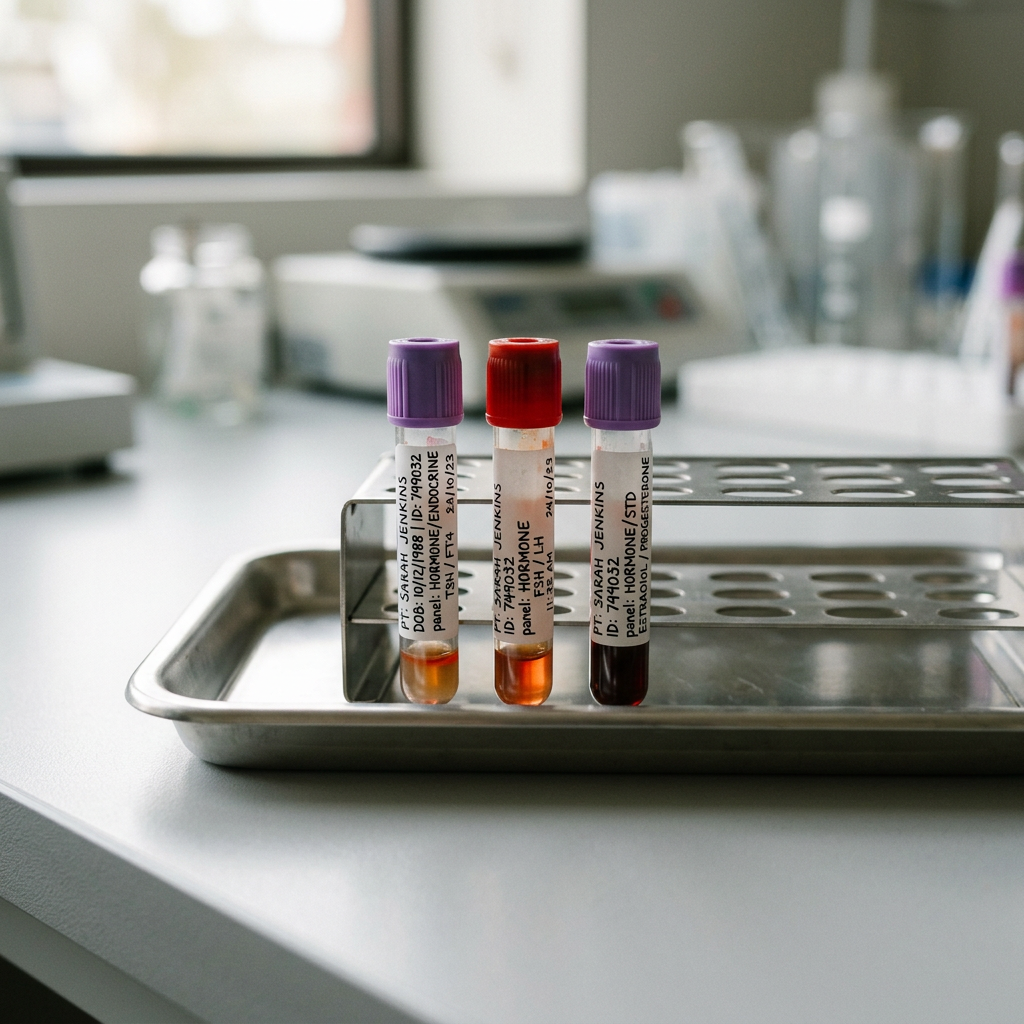
So How Do Physicians Actually Diagnose Perimenopause?
In practice, the diagnostic sequence looks like this:
- Age and symptom pattern first: irregular cycles, hot flashes, sleep changes and mood shifts in a woman typically in her 40s (or occasionally late 30s) point strongly toward perimenopause before any blood work happens.
- Cycle history over time: tracking cycle length changes across several months is often more informative than a single hormone panel, since it reflects the actual pattern rather than one snapshot.
- Bloodwork to rule out mimics: thyroid dysfunction, in particular, produces a very similar symptom profile (fatigue, mood change, cycle irregularity) and needs to be excluded with a TSH test.
- Repeat hormone testing when useful: a single FSH is not diagnostic, but tracking FSH and estradiol across a few cycles, alongside symptoms, can add supporting context, particularly to help distinguish early from late perimenopause.
- AMH for broader context: while not diagnostic of perimenopause specifically, AMH can help estimate general reserve trend, useful in specific clinical situations like fertility planning.
The honest summary: perimenopause is a clinical diagnosis built on your history and pattern, with blood tests playing a supporting, rule-out, and context role, not a headline confirmatory one.
When Does Testing Become More Useful?
Testing adds more value in specific situations: when symptoms are atypical or a physician wants to rule out thyroid disease, PCOS, or another cause; when a woman is considering fertility options and wants a sense of ovarian reserve trend; or later in the transition, when FSH becomes more consistently and reliably elevated, making it more informative than in the early, more chaotic phase.
What This Means If Your Bloodwork Came Back "Normal"
This is one of the most common frustrations reported by women in early perimenopause: a doctor runs a hormone panel, it comes back within normal range, and symptoms get dismissed as unrelated or attributed elsewhere. Given how much these hormones fluctuate, a normal reading at one point in time genuinely does not rule out perimenopause. If your symptom pattern and age fit and initial bloodwork was normal, a repeat panel at a different point in your cycle, or simply tracking symptoms over a few months, is a reasonable next step rather than accepting the single result as final.
How AION Approaches Perimenopause Assessment
AION's women's health program treats hormone testing as one part of a broader clinical picture, cycle history, symptom pattern, and repeat testing where useful, rather than expecting a single blood draw to deliver a definitive answer. This matches how perimenopause diagnosis actually works in evidence-based practice.
Related AION Resources
For the full symptom picture by stage, see our guide on perimenopause symptoms by stage. Cognitive symptoms overlap significantly during this transition; our guide on menopause and brain fog covers that connection directly. For the underlying evidence on hormone panel interpretation, see our review of standard hormone panels: diagnosis versus screening.
FAQ
Is there a definitive blood test for perimenopause? No. Hormone levels fluctuate too much during perimenopause for a single test to definitively confirm or rule it out. Diagnosis relies primarily on age, symptoms, and cycle pattern.
Why did my FSH come back normal even though I have symptoms? FSH fluctuates significantly during perimenopause, especially early on. A normal reading at one point does not rule out perimenopause; repeat testing or symptom tracking over time is more informative than one result.
What blood tests are actually useful during perimenopause evaluation? TSH to rule out thyroid dysfunction is important. FSH and estradiol can add context, particularly later in the transition, and AMH can offer a general reserve trend, though none are standalone diagnostic tests.
Can thyroid problems be mistaken for perimenopause? Yes. Thyroid dysfunction produces a very similar symptom profile, fatigue, mood changes, cycle irregularity, which is why TSH testing is a standard part of a proper perimenopause workup.
Is AMH testing useful for diagnosing perimenopause? AMH gives a general sense of ovarian reserve trend but isn't diagnostic of perimenopause specifically and can't predict the exact timing of menopause for an individual.
Should I get retested if my first hormone panel was normal but I still have symptoms? Yes, this is reasonable. Given how much hormones fluctuate, a single normal panel doesn't rule out perimenopause, especially if your age and symptom pattern otherwise fit.
This article is for educational purposes and does not replace individualized medical advice. Always discuss your specific symptoms and test results with a physician.
Relevant at AION



This article is educational and is not medical advice. Whether any therapy is appropriate for you is a clinical decision made by a physician after an individual assessment.